
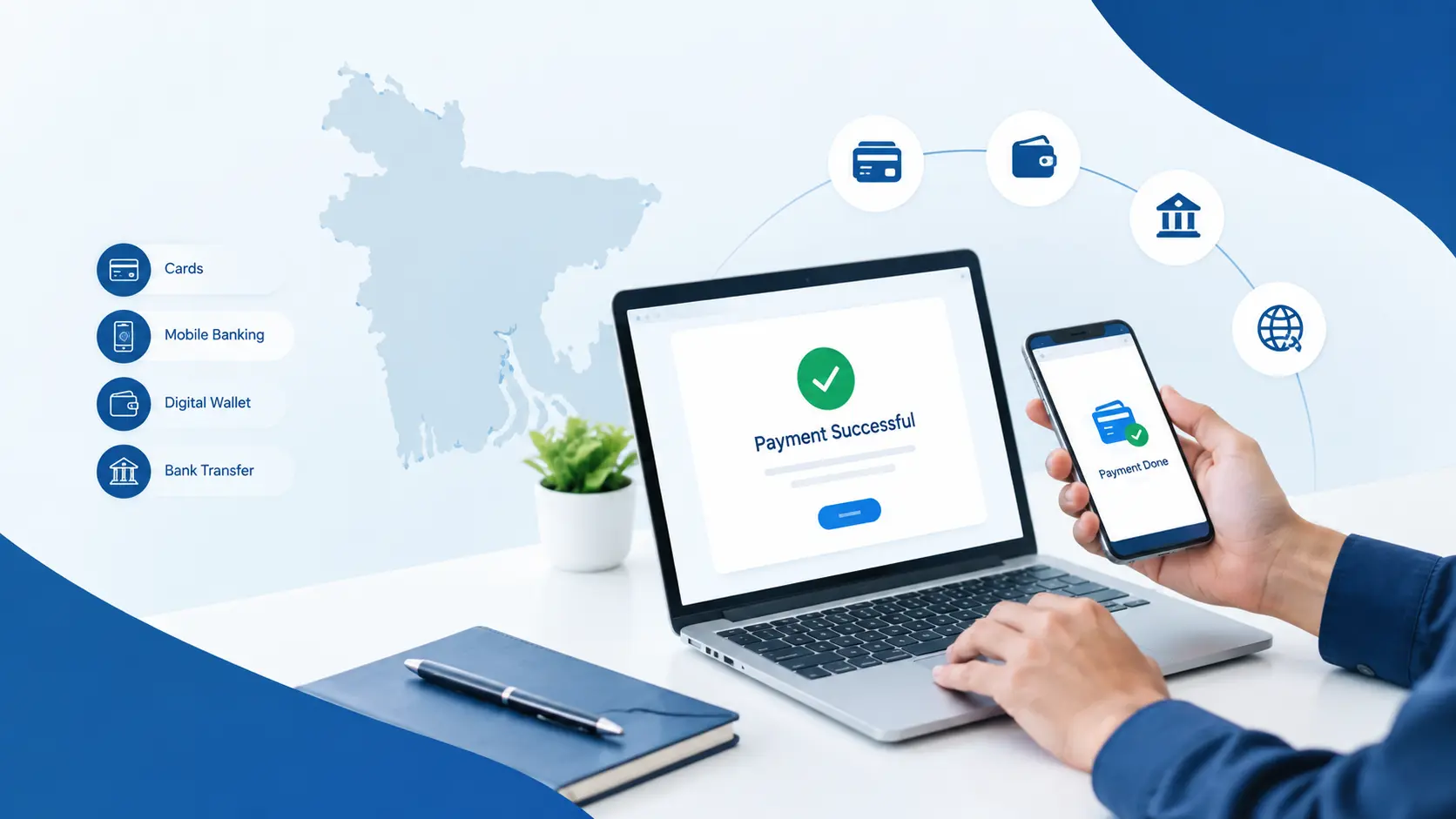
For many businesses in Bangladesh, accepting payments is no longer limited to cash or traditional bank deposits. Customers now expect convenient ways to pay for products, services, subscriptions, and business fees. A company that cannot provide suitable payment options may face delayed collections, missed sales, and additional administrative work.
Building a reliable digital payment strategy requires more than adding a payment button to a website. Businesses need to consider customer preferences, transaction security, payment records, settlement procedures, and long-term operational requirements. A suitable online payment gateway in Bangladesh can become part of this process by helping businesses accept payments through digital channels.
The right strategy depends on the nature of the business, its customers, transaction volume, and sales channels. A small consultancy firm may have different needs from an e-commerce store, restaurant, educational institution, or manufacturing company. Before selecting a payment solution, businesses should understand their current challenges and set clear payment-related goals.
This guide explains how businesses in Bangladesh can build a practical digital payment strategy and what they should consider before choosing a payment partner.
What Is a Digital Payment Strategy?
A digital payment strategy is a structured plan for receiving, managing, recording, and reconciling payments through electronic channels. It covers the payment methods a business accepts, how customers complete transactions, how payment information is tracked, and how funds are settled.
For example, an online store may accept customer payments through a website, while a consultancy firm may send payment links to clients. A school may collect tuition fees, and a restaurant may accept payments at its counter or through online orders.
Each business needs a payment process that matches its operating model.
A practical digital payment strategy should answer several questions:
- Which payment methods do customers prefer?
- How will the business receive and confirm payments?
- How will transaction records be maintained?
- Who will monitor failed or pending payments?
- How will refunds and customer complaints be handled?
- What reporting information does the finance team need?
Answering these questions before implementation can help businesses avoid unnecessary complications.
1. Understand Your Business Payment Requirements
The first step is to review how your business currently receives money. Start by identifying the types of payments you collect and the people who make those payments.
A business may receive:
- Product payments from customers
- Service fees from clients
- Monthly subscriptions
- Admission or registration fees
- Supplier or vendor settlements
- Advance payments
- Recurring membership fees
Payment frequency also matters. A company processing 30 transactions per day may have different requirements from a business processing 3,000 transactions per day.
For example, a consultancy firm may need payment links and invoice-related records. An e-commerce business may require website checkout, payment confirmation, and refund management. A school may need a system that supports several fee categories.
Create a basic payment requirement sheet that includes transaction volume, payment types, customer groups, sales channels, and reporting needs. This will help you compare payment solutions based on actual business requirements instead of choosing a service only because it is popular.
2. Study Customer Payment Preferences
Customers should not have to face unnecessary difficulties when paying for a product or service. Your payment strategy should reflect the payment habits of your target audience.
The available online payment methods in Bangladesh may vary based on the payment provider, business type, customer location, and transaction requirements. Businesses should review which options are suitable for their customers and industry.
Consider the following questions:
- Do customers prefer mobile-based payments?
- Do they frequently use cards or bank accounts?
- Are customers paying through websites, social media, or physical locations?
- Do business clients require invoices or payment links?
- Are international customers part of your target market?
You can collect this information through customer feedback, sales records, and support conversations. A simple review of 100 recent customer transactions, for example, may show that most buyers prefer one payment channel while a smaller group uses another.
This is an illustrative approach, not a universal market statistic. Your own transaction data should guide your decisions.
3. Select a Suitable Payment Provider
Choosing a payment provider is one of the central decisions in a digital payment strategy. The service should match your transaction needs, business model, and customer base.
Many businesses search for the best payment gateway Bangladesh when starting their research. Rather than relying only on promotional claims, compare the services using clear criteria.
Review These Factors
- Payment options: Check whether the provider supports the payment channels your customers use.
- Transaction processing: Understand how payments are initiated, confirmed, and recorded.
- Settlement process: Review settlement schedules, applicable conditions, and how funds reach your business account.
- Reporting: Check whether transaction reports are available in a format your finance team can use.
- Customer support: Understand how payment failures, disputes, and technical issues are handled.
- Integration requirements: Review whether the payment solution can work with your website, software, or existing workflow.
For example, a business that processes around 500 transactions each month may prioritize clear reporting and customer support. A company processing 20,000 transactions may also require more detailed monitoring, reconciliation, and operational controls.
The right choice should be based on your requirements and the provider's documented capabilities.
4. Provide a Clear Payment Experience
A customer may leave a transaction unfinished if the payment process is confusing. Businesses should review every stage, from selecting a payment method to receiving confirmation.
A clear payment experience usually includes:
- A visible payment option
- Accurate pricing and payable amounts
- Clear payment instructions
- Appropriate security checks
- A confirmation message after payment
- A support contact for payment-related questions
For online businesses, the checkout page should communicate the amount due and the available payment options clearly. For service providers, payment instructions should match the invoice and agreed terms.
A business can test its payment process by asking a few employees or selected customers to complete a transaction. Record the time required, points of confusion, and any messages that need clarification.
For instance, if five out of 20 test users ask where to find payment confirmation, the confirmation process may need improvement. This type of internal testing provides practical insight without relying on unsupported industry-wide claims.
5. Maintain Accurate Transaction Records
Payment collection and financial record-keeping should work together. A transaction may be completed by the customer, but the business still needs to record the amount, date, reference number, and payment status.
A proper record system can help teams identify:
- Completed payments
- Pending transactions
- Failed payment attempts
- Refund requests
- Duplicate entries
- Unmatched settlement amounts
Businesses should decide who will review transaction records and how frequently reconciliation will take place.
A small business might review its transactions daily, while a larger organization may require separate checks by the finance and operations teams. The appropriate schedule depends on transaction volume and business risk.
For example, if a business receives 200 payments in a day and finds 8 transactions that do not match its internal records, the finance team should investigate those entries before final reconciliation.
This example illustrates why record matching matters; it is not a reported industry benchmark.
6. Plan for Payment Security
Security should be part of the payment strategy from the beginning. Businesses handle customer information and financial transaction details, so access and monitoring procedures need careful attention.
Some practical steps include:
- Restricting access to payment dashboards
- Using strong passwords and appropriate authentication
- Reviewing user permissions regularly
- Avoiding the storage of sensitive information without a valid need
- Checking transaction reports for unusual activity
- Training staff on common payment-related scams
Employees should know how to identify suspicious payment requests, unexpected account changes, and unusual refund instructions.
Businesses should also review the security information and compliance responsibilities provided by their selected payment partner. The exact requirements may vary according to the payment setup, transaction type, and applicable regulations.
Security is not only a technical matter. Internal approval procedures and staff awareness also play a role in protecting business transactions.
7. Create a Payment Failure and Refund Process
Even with a suitable payment system, some transactions may fail or remain pending. Customers need clear instructions about what to do next.
Your business should prepare a simple process for handling:
- Failed payments
- Delayed confirmations
- Duplicate payments
- Refund requests
- Incorrect payment amounts
- Unrecognized transactions
For example, if a customer reports that money was deducted but the order status is still pending, the support team should collect the relevant transaction details and follow the provider's verification process.
Avoid asking customers to repeat payments before checking the original transaction status. This can create duplicate charges and further confusion.
A written internal procedure can help employees respond consistently. It should explain who handles the issue, what information is required, and how the customer will receive an update.
8. Consider International Payment Requirements
Some Bangladeshi businesses work with overseas clients, tourists, foreign buyers, or international service users. Their payment requirements may differ from businesses serving only local customers.
A business searching for an international payment gateway in Bangladesh should first identify its target countries, transaction currencies, service eligibility, settlement requirements, and applicable restrictions.
Before selecting a provider, clarify:
- Which countries and currencies are supported?
- What transaction conditions apply?
- How are international payments settled?
- Are additional verification steps required?
- What fees or exchange-related conditions may apply?
Not every business needs international payment functionality. If your customers are based entirely in Bangladesh, a local payment setup may meet your current requirements. If you plan to serve overseas customers, assess those needs before making a decision.
9. Monitor Performance and Review the Strategy
A digital payment strategy should be reviewed regularly. The goal is to identify operational problems and understand how customers use the available payment channels.
|
Metric |
What It Helps You Understand |
|
Payment completion rate |
How many initiated transactions are completed |
|
Failed payment count |
Frequency of unsuccessful transactions |
|
Refund volume |
Number of payments requiring reversal |
|
Settlement time |
Time taken for funds to reach the business |
|
Support requests |
Common customer payment problems |
|
Reconciliation differences |
Mismatches between payment and internal records |
Suppose a business reviews 1,000 payment attempts in one month and finds that 40 were unsuccessful. The resulting 4% failure rate is an internal example, not a verified industry average. The business can investigate the causes and compare the figure with its own results over time.
Regular review helps management decide whether the current payment process meets customer and operational requirements.
10. Choose a Payment Partner That Matches Your Needs
A reliable payment strategy combines suitable technology, clear processes, staff responsibility, and regular monitoring. No single setup is suitable for every business.
When evaluating a payment gateway service provider in Bangladesh, review its available services, supported payment options, business requirements, reporting facilities, and support process. Ask specific questions before making a commitment, and confirm any commercial or technical conditions directly with the provider.
EPS Bangladesh offers payment solutions for businesses across different industries, including education, RMG, consultancy, procurement, retail, healthcare, e-commerce, and other sectors. Businesses can review the relevant service options based on their operating needs.
Final Thoughts
Building a reliable digital payment strategy in Bangladesh starts with understanding your business and customers. From selecting payment methods to managing transaction records, each part of the process should support clear operations and a convenient customer experience.
Start by reviewing your business payment requirements, customer preferences, transaction volume, and operational challenges. Then select a payment solution that fits your needs, maintain accurate records, and regularly review payment performance.
With the right planning and a suitable payment partner, businesses can create a more organized payment process that supports daily operations and long-term growth. EPS Bangladesh provides digital payment solutions for businesses across different industries, helping them manage their payment requirements through suitable digital channels.