
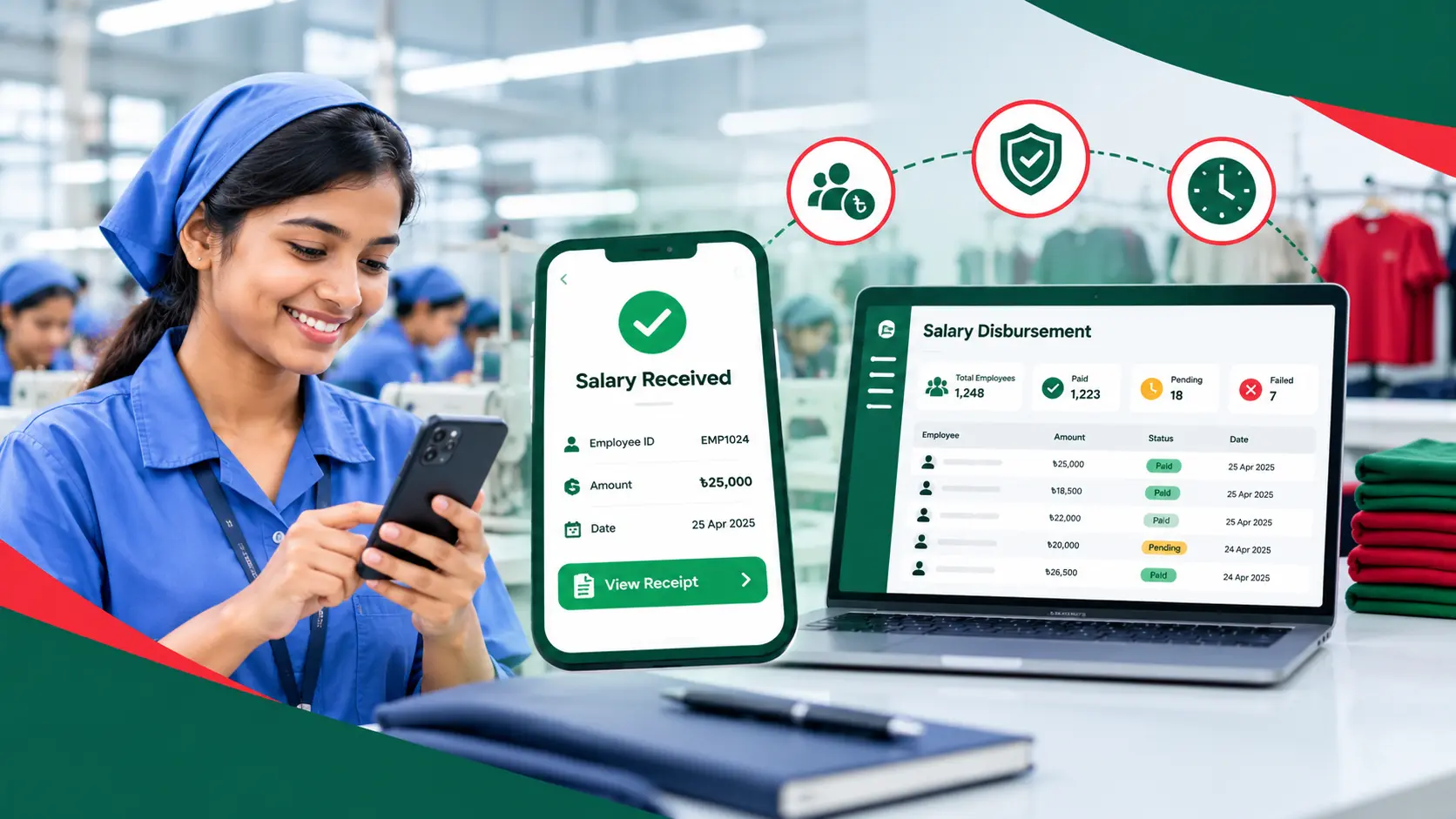
The ready-made garment industry involves a large workforce, multiple production units, factory locations, and regular salary disbursements. For finance and HR teams, paying employees is only one part of the task. They also need to confirm who has been paid, identify pending transactions, maintain records, and resolve payment-related questions.
As factories grow, managing salary payments through paper records, spreadsheets, or several disconnected payment channels can become difficult. A suitable online payment gateway in Bangladesh can form part of a broader digital payment process, giving businesses a structured way to manage transactions and payment records.
For garment manufacturers looking for sector-specific options, RMG Industry Payment Gateway Solutions in Bangladesh can support the broader payment requirements of the industry. A salary payment process should be planned around workforce size, payment frequency, employee information, financial controls, and the company's existing banking or payment arrangements.
This guide explains how RMG businesses can improve employee salary disbursement tracking and reduce the administrative difficulties that often come with large-scale salary payments.
Why Salary Disbursement Tracking Matters in RMG?
Salary payments are usually time-sensitive. Employees expect their wages to arrive according to the agreed payment schedule. A delay, incorrect amount, or unclear payment status can quickly create questions for HR and accounts teams.
A garment factory with 1,500 employees, for example, may need to process 1,500 salary transactions during a payment cycle. If even 2% of those transactions require manual checking, that means around 30 cases may need additional attention.
The 2% figure is an illustrative example, not an industry benchmark.
The larger the workforce, the more useful a structured tracking process becomes. Finance teams need to know:
- How many salary payments were initiated
- How many were completed
- Which transactions are pending
- Which payments failed
- Which employees require additional verification
- Whether the total disbursed amount matches the payroll record
A clear system can make these checks easier.
1. Start With Accurate Employee Payroll Information
Salary tracking begins before the payment is sent.
Employee information should be reviewed regularly so that payroll records contain the correct details. Depending on the organization's process, this may include:
- Employee name
- Employee ID
- Department
- Factory or production unit
- Salary amount
- Bank or payment account details
- Payment period
- Relevant deductions
- Payment status
A small error in an account number or employee record can cause a payment to fail or reach the wrong destination.
RMG companies often have employees joining, leaving, changing departments, or moving between production units. Payroll information should reflect these changes before each salary cycle.
A defined approval process can also help. For example, the HR team can verify employee records while the accounts team checks salary amounts before the payment file or transaction batch is processed.
2. Create a Single Salary Payment Record
One of the common problems with manual salary management is that information may exist in different files.
The HR department may have one spreadsheet, accounts may maintain another record, and bank transaction information may be stored separately.
This makes reconciliation harder.
A centralized salary payment record can contain:
|
Information |
Purpose |
|
Employee ID |
Identifies the employee |
|
Salary period |
Shows which month or cycle was paid |
|
Net salary |
Confirms the payable amount |
|
Transaction reference |
Helps track the payment |
|
Payment date |
Records when payment was processed |
|
Status |
Shows successful, pending, or failed |
|
Remarks |
Records any special issue |
With these fields in one place, the accounts team can compare payroll data with payment information more easily.
3. Use Digital Payment Channels for Salary Disbursement
Digital payment channels can reduce the need for manual cash handling and paper-based records.
Before selecting a solution, RMG businesses should review the online payment methods in Bangladesh that are suitable for their payment requirements.
The appropriate choice depends on factors such as:
- Number of employees
- Payment frequency
- Employee access to banking or digital accounts
- Transaction volume
- Existing payroll systems
- Settlement arrangements
- Reporting requirements
A factory may process several hundred or several thousand salary payments at once. The payment process should give the finance team enough information to identify individual transactions and review their status.
The goal is not simply to send money digitally. The business also needs a reliable record of what happened after each payment was initiated.
4. Track Payment Status After Disbursement
Sending a salary payment does not necessarily mean the payment process is finished.
Finance teams should be able to identify whether a transaction is:
- Successful
- Pending
- Failed
- Returned
- Under review
Suppose a factory sends 2,000 salary payments and its payment records show 1,970 successful transactions, 20 pending transactions, and 10 failed transactions. The accounts team immediately knows which 30 cases require attention.
This example demonstrates the value of transaction-level tracking. The figures are illustrative and should not be treated as an industry statistic.
Without status information, staff may need to manually compare bank records, payroll files, employee complaints, and payment confirmations.
5. Match Payroll Data With Transaction Records
Reconciliation is one of the most important parts of salary disbursement tracking.
The payroll system may show that an employee should receive ৳25,000. The payment record should then show a corresponding transaction for that employee and amount.
The accounts team can compare:
Payroll amount → Payment amount → Transaction status → Settlement record
If the figures do not match, the team can investigate before closing the salary cycle.
For a factory processing 1,500 salaries, even a small number of mismatches can create extra administrative work. A structured reconciliation process helps staff identify those cases without checking every transaction manually from the beginning.
Businesses should also keep records of corrections and adjustments so that there is a clear history of what happened.
6. Give Employees Clear Payment Confirmation
Employees may contact HR when they are unsure whether their salary has been processed.
A clear payment confirmation process can reduce repeated questions.
Depending on the payment setup, employees may receive:
- Transaction confirmation
- Payment reference
- Payment date
- Salary amount
- Digital receipt or notification
The information should be easy to understand.
For example, instead of simply showing "Transaction Completed," a payment notification could include the payment date, reference number, and relevant salary period.
This gives employees information they can refer to when contacting HR or accounts.
7. Create a Process for Failed Salary Payments
Failed salary transactions require quick attention because they directly affect employees.
RMG businesses should define what happens when a salary payment does not reach an employee.
A simple process can include:
- Identify the failed transaction.
- Check the employee's payment information.
- Confirm the reason or transaction status.
- Correct the relevant information if required.
- Reprocess the payment according to internal approval rules.
- Record the action taken.
- Confirm the updated status.
The employee should also receive appropriate communication when a payment issue is being reviewed.
A written process reduces confusion between HR, accounts, factory management, and the employee concerned.
8. Keep Access to Salary Information Controlled
Salary information is sensitive business and employee data. RMG businesses should carefully control who can view or change payroll and payment records.
Access can be assigned according to job responsibilities.
For example:
- HR may manage employee information.
- Accounts may process and reconcile salary payments.
- Factory management may access selected reports.
- Senior management may review summary information.
User accounts should be reviewed when employees change roles or leave the organization.
Businesses should also keep a record of important changes to payroll information where the system supports such functionality.
9. Review the Payment Process After Every Salary Cycle
A salary payment cycle provides useful information about what worked and what caused problems.
After each cycle, the finance or payroll team can review:
- Total number of employees paid
- Total salary amount
- Failed transactions
- Pending transactions
- Reconciliation differences
- Employee payment complaints
- Time spent resolving payment issues
Suppose a company processes 1,800 salary transactions and receives 25 payment-related complaints during one cycle. The team can categorize those complaints to identify repeated issues.
Perhaps 12 were related to payment confirmation, 8 were related to account information, and 5 involved other issues. Such internal data can show where process changes may be useful.
These numbers are examples rather than reported RMG industry statistics.
10. Select a Payment Provider That Fits RMG Requirements
Payment requirements can differ from one garment business to another. A small factory and a large group with several production units may need different payment arrangements.
When reviewing a payment gateway service provider in Bangladesh, RMG businesses should ask about:
- Transaction capacity
- Payment channels
- Transaction reporting
- Settlement process
- Payment confirmation
- Support availability
- Integration requirements
- Security procedures
Businesses should also understand the provider's terms and conditions before starting salary-related transactions.
The best payment gateway Bangladesh option for one company may not necessarily be the right choice for another. The decision should be based on workforce size, payment volume, existing financial processes, and the type of payment service required.
What About International Employees or Overseas Transactions?
Most employee salary payments in RMG factories are domestic. Some companies, especially groups with international operations, may also have overseas payment requirements.
If your organization needs to make or receive international transactions, review whether an international payment gateway in Bangladesh fits the intended use case.
Before selecting such a service, check:
- Supported countries
- Supported currencies
- Settlement process
- Business eligibility
- Transaction conditions
- Verification requirements
International payment facilities should only be included when they match actual business needs.
Build a Better Salary Tracking Process
A digital salary disbursement process is not only about sending employee payments. It also involves accurate payroll information, transaction records, payment confirmation, reconciliation, failed-payment handling, and controlled access.
RMG businesses can start by mapping their current salary process and identifying where manual work takes the most time. The next step is to define the information that HR and accounts teams need before, during, and after every salary cycle.
An easy payment system in Bangladesh can support this process when it is selected according to the company's workforce, transaction requirements, and existing financial operations.
For RMG businesses, the aim should be a payment process where employees receive clear payment information and finance teams can quickly identify successful, pending, and failed transactions.
With proper planning, digital records, and a payment setup that fits the company's requirements, salary disbursement tracking can become a more organized part of the overall payroll process. EPS Bangladesh provides payment solutions for different business sectors, including the RMG industry, allowing businesses to review payment services according to their specific operational requirements.