
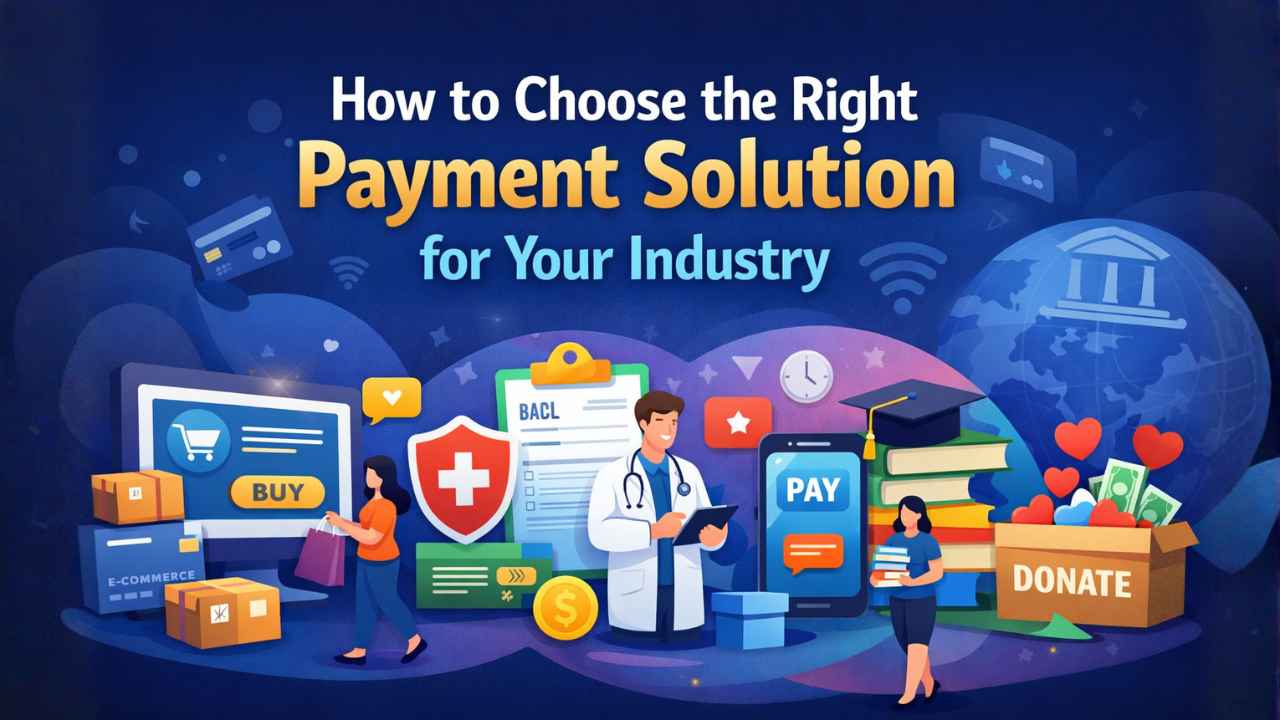
Choosing the right payment solution is one of the most important decisions a business can make. A secure and industry-focused system directly impacts customer trust, operational efficiency, and long-term profitability. Businesses looking for a reliable and scalable digital payment infrastructure can explore EPS – Easy Payment System to understand how a structured payment architecture supports different industries.
Not every business requires the same payment setup. From education institutions to retail chains and healthcare providers, each sector processes transactions differently. A trusted digital payment solution provider in Bangladesh like EPS, helps organizations implement secure, compliant, and scalable systems aligned with industry-specific requirements.
If your goal is to reduce payment failure rates, improve transaction security, and streamline reconciliation, working with a reliable industry-specific payment gateway solution such as EPS ensures your infrastructure supports growth instead of limiting it.
Below is a practical guide to help you choose the right payment solution for your industry.
Top 10 Guide to choose the right payment solution
1. Understand Your Industry Requirements
Every industry has unique transaction patterns and compliance standards.
For example:
- Education institutions need recurring tuition collection and installment options.
- Healthcare providers require secure patient billing systems with strict data protection.
- Retail businesses depend on fast POS integration and multi-channel payments.
- E-commerce companies need checkout optimization and cart abandonment reduction tools.
Before selecting a payment gateway, define:
- Transaction volume (daily/monthly)
- Average transaction size
- Recurring vs one-time payments
- Regulatory requirements
- Integration needs
A payment solution must align with how your industry operates.
2. Prioritize Security & Compliance
Security is not optional in digital payment processing.
Look for:
- PCI DSS compliance
- End-to-end encryption
- Fraud detection systems
- Secure API architecture
- Tokenization support
Industries like fintech, healthcare, and government services require strict compliance measures. A secure payment processing system protects both your business and your customers.
3. Evaluate Integration Capabilities
Your payment solution should integrate smoothly with your existing systems such as:
- ERP software
- CRM platforms
- POS systems
- Learning management systems (for education)
- E-commerce platforms
API flexibility is critical. A poor integration setup can create operational bottlenecks and reporting errors.
4. Check Industry-Specific Features
A generic payment gateway may not address your specific needs.
Look for features such as:
- Recurring billing & subscription management
- Bulk payment processing
- Multi-branch support
- Real-time reporting dashboard
- Mobile-friendly payment options
- Multi-currency support (if applicable)
An industry-focused payment solution ensures smoother operations and better customer experience.
5. Analyze Transaction Fees & Cost Structure
Cost matters, but it should not be the only deciding factor.
Review:
- Transaction fees
- Setup fees
- Maintenance charges
- Chargeback fees
- Settlement timelines
A lower fee with poor service or frequent downtime can cost more in the long run.
6. Assess Reliability & System Performance
Downtime directly affects revenue.
Check:
- Uptime guarantee
- Transaction success rate
- Server infrastructure quality
- Technical support availability
Industries like retail and online services depend heavily on continuous availability.
7. Consider Customer Experience
Payment experience affects conversion rates.
A good industry payment solution should provide:
- Fast checkout
- Minimal redirection
- Clear payment confirmation
- Instant receipt generation
- Mobile optimization
For e-commerce and service-based industries, payment friction leads to lost revenue.
8. Review Reporting & Analytics Capabilities
Business decisions depend on data.
Choose a payment system that provides:
- Real-time transaction tracking
- Automated reconciliation
- Exportable financial reports
- Revenue breakdown by service or branch
This is especially important for multi-location businesses and institutions handling high transaction volumes.
9. Evaluate Support & Onboarding Process
Technical issues can happen. The real difference lies in how quickly they are resolved.
Before choosing a payment provider, ask:
- Is onboarding guided?
- Is technical support available during business hours?
- Is there a dedicated account manager?
Reliable support ensures long-term stability.
10. Think Long-Term Scalability
Your business will grow. Your payment solution must grow with it.
Consider:
- Ability to handle higher transaction volume
- Multi-branch expansion
- Cross-border transactions
- New service integration
A scalable payment infrastructure prevents the need for frequent system changes.
Common Mistakes Businesses Make
- Choosing based only on low fees
- Ignoring compliance requirements
- Not testing integration before launch
- Overlooking customer checkout experience
- Selecting generic systems for specialized industries
Avoiding these mistakes saves time and protects revenue.
Conclusion
Choosing the right payment solution for your industry is not just about processing transactions. It’s about security, compliance, efficiency, and customer satisfaction.
By evaluating industry requirements, security standards, integration capabilities, and long-term scalability, businesses can select a payment processing system that supports steady growth.
If your organization operates in education, healthcare, retail, e-commerce, government services, or manufacturing, investing in an industry-specific payment solution ensures smoother operations and stronger customer trust.
The right choice today builds a stable financial infrastructure for the future.
Guide-to-choose-the-right-payment-solution